

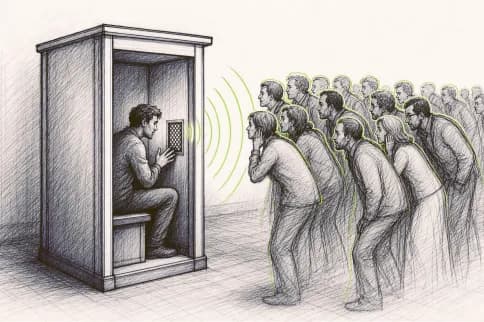
If You Don't Want to See Your Chatbot Prompts as an Exhibit Tab in Federal Court, Then They Don't Belong in a Preserved Public Cloud.
AI chatbots are not trusted colleagues; they are not a secure DMS. Generative AI platforms are not co-counsel, and they do not owe your clients any duty of confidentiality or privilege.
In The New York Times Co. v. Microsoft Corp., et al., Judge Ona T. Wang ordered OpenAI to "preserve and segregate all output log data" for ChatGPT, including data that otherwise would have been deleted. That means user chats now sit, potentially indefinitely, on servers under a federal preservation order and can be reached by subpoena or discovery requests when relevant. From an ethics perspective, that is the opposite of "reasonably safeguarded" client information.
Under Model Rule 1.6 and its state analogs, lawyers must not only refrain from disclosing "information relating to the representation of a client," but must also make reasonable efforts to prevent unauthorized access or disclosure. Formal guidance from multiple bars has started to converge on the same point: you may use AI, but only if you do so competently and securely, with adequate safeguards for confidentiality and supervision. Dumping unredacted client facts into a consumer chatbot window that is expressly under a court-ordered preservation regime is hard to square with that standard.
For trademark lawyers in particular, the risk vector is obvious: clearance rationales, early branding concepts, cease-and-desist strategies, licensing structures, and confidential client roadmaps often appear verbatim in prompts. Those details are precisely the kinds of proprietary and trade secret information that ethics opinions warn about when they address generative AI. If those logs are later pulled into litigation, whether in copyright cases like NYT v. OpenAI or other disputes, they can expose both client confidence and your internal risk-assessment thinking.
This is exactly why we built CrossBeamIP the way we did. Instead of streaming potential brand information into a public LLM, CrossBeamIP runs searches against closed, cached trademark and marketplace databases inside a controlled environment. Potential marks, search strategies, and client-specific instructions stay in a segregated system by design, so your next big brand idea doesn't end up in someone else's discovery database or preserved in a consumer chat log you can't control.
Bar authorities have begun to spell this out. Commentators analyzing Rule 1.6 and recent ethics opinions note that lawyers must understand how AI tools store and use data and must avoid tools that expose client information to third-party access, absent informed consent and robust security. A 2024 formal ethics opinion from the North Carolina State Bar, for example, permits the use of AI only if the lawyer protects confidentiality and implements reasonable security measures when transmitting or storing client information. A preservation order that freezes "deleted" chats in place should be treated as a flashing red warning that consumer-grade use may not satisfy that duty.
So, if you're going to bring AI into your trademark practice, treat architecture as an ethics issue, not just a tech choice. Keep client identities and live fact patterns out of consumer chatbots, train your team accordingly, and reserve sensitive clearance work for tools that keep data within a closed, cached system, such as CrossBeamIP's system. If you don't want to see your client's info as an exhibit tab in federal court, then it doesn't belong in a preserved public cloud chat window.
References: