
Darth Vader's iconic breathing is a registered U.S. trademark and not just a cinematic sound effect. That fact offers a useful bridge to a newer trend: artists and performers seeking to protect their voices and appearances from AI-driven impersonation.
The Darth Vader Breathing Sound Mark
Lucasfilm (now part of Disney) owns a sound mark registration for Darth Vader's distinctive breathing (U.S. Reg. No. 3618322). The mark's description states that it consists of "the sound of rhythmic mechanical human breathing created by breathing through a scuba tank regulator," and it covers goods like Halloween and masquerade costumes with masks, costume masks, voice-altering toys, toy computers, handheld playthings, and modeled plastic toy figurines.
Sound designer Ben Burtt created the effect by recording himself breathing through a scuba regulator and then carefully editing that audio to sync with James Earl Jones's dialogue and the on-screen image of Vader's mask, producing one of the most recognizable sound signatures in modern film. Lucasfilm submitted a multi-minute audio specimen to the USPTO as part of the sound mark application, and the registration helps the company police knockoff costumes and toys that might otherwise ride on the franchise's aura by mimicking Vader's breathing.
Why a Sound Mark for Breathing?
The registration illustrates the flexibility of trademark law in protecting non-traditional indicators of source, including sounds, colors, and other sensory cues. In the Darth Vader example, the breathing serves the same basic function as a logo: consumers encountering that sound on a toy or costume are likely to assume a connection to the official Star Wars franchise, making the sound an effective badge of origin.
This kind of protection also reflects a broader branding strategy: beyond the word mark DARTH VADER and the visual look of the mask and suit, the character's identity is ring-fenced through multiple trademarks, traditional and non-traditional, to reinforce exclusivity and licensing value. Together, those rights help Lucasfilm control the character's commercial exploitation across media, merchandise, and promotional tie-ins, which has become increasingly important as new uses of the character (and his audio-visual persona) proliferate.
From Breathing Sounds to Branded Personas
The Darth Vader sound mark now reads almost like a historical precursor to current concerns about synthetic performance and digital cloning. Just as Lucasfilm anticipated that third parties might copy the breathing sound to sell unlicensed products, today's performers and creators anticipate that AI systems can replicate their voices and likenesses.
The core legal question is similar: when does a particular sound or visual presentation function as an indicator of who you are (and where a product or service comes from), and how can you stop others from exploiting that association without consent? For celebrities, musicians, and other public-facing artists, their "brand" is often embodied in a combination of name, image, voice, and style, making trademark and related rights an increasingly attractive component of their protection toolkit.
Artists Trademarking Names, Looks, and Voices
There is a growing trend of artists, entertainers, and public figures seeking trademark protection for their professional names, logos, and sometimes stylized depictions or silhouettes that encapsulate their "look." Examples frequently noted in legal discussions include word marks for slogans or catchphrases (such as Paris Hilton's "THAT'S HOT") and distinctive logos or silhouettes associated with a particular performer or athlete.
While trademark protection for a "voice" as such is more complex, the logic behind Darth Vader's breathing sound mark has clear analogs: if a particular sound (for example, a signature vocal tag, intro phrase, or stylized spoken identifier) consistently signals a performer as the source of entertainment services or recordings, it can, in principle, qualify as a protectable sound mark. For many artists now facing AI voice cloning, the idea is to frame key audio cues not just as artistic choices but as brand assets, source identifiers that can be licensed, enforced, and monetized, and whose unauthorized reproduction can be challenged under trademark and unfair competition theories in addition to more traditional publicity and copyright claims.
AI Cloning, Misappropriation, and Legal Overlap
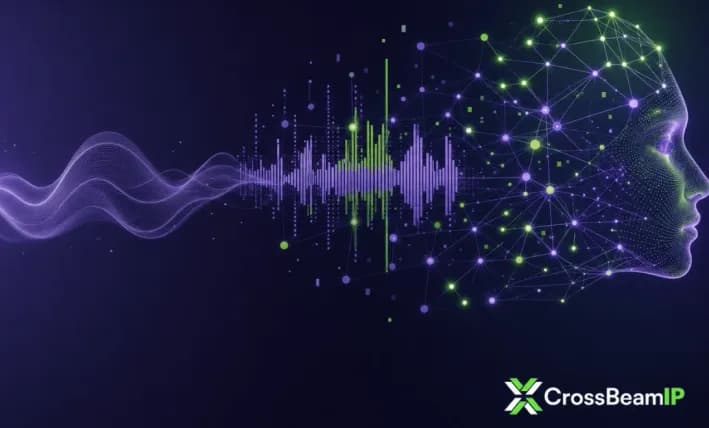
Generative AI systems can now convincingly mimic a person's voice from a short sample, leading to high-profile incidents in which actors and public figures discover their synthetic "voice" being used in advertising or content they never agreed to. Similar concerns apply to image-based models that learn and reproduce an artist's visual style or a performer's distinctive look, raising questions about misappropriation of persona, the right of publicity, and potential confusion regarding endorsement.
Legal responses are still evolving, but commentators note that existing frameworks, such as trademark law, the right of publicity, and unfair competition, can be used in combination. If an AI-generated voice or avatar is presented in a way that suggests official endorsement or originates from the real artist, confusion-based claims and dilution arguments may complement publicity and contractual theories, especially where the artist has already used registrable marks (names, logos, or stylized signatures) to brand their work.
Beyond Law: Technical Shields Against AI
Alongside legal measures, researchers and practitioners are developing technical tools to help artists resist unauthorized use of their work in AI model training. Tools such as Glaze and Nightshade introduce carefully engineered perturbations into images: Glaze focuses on protecting an artist's style by cloaking artwork so that models trained on it fail to learn the true stylistic features, while Nightshade "poisons" training data by causing models to mis-associate protected styles or objects with incorrect outputs.
Other approaches include opt-out registries, metadata flags (such as "noai" and "noimageai" tags), and robots.txt rules that signal to AI crawlers that the content should not be used for training, combined with clear contractual terms and website notices prohibiting such use. Although these measures are imperfect and rely on AI developers' cooperation or on technical arms races, they reflect an emerging dual strategy: legal protection of identity-signifying elements (names, marks, personas, and key sounds) paired with technical friction that makes unauthorized AI exploitation harder or less reliable.
Darth Vader's Lesson for the AI Era
The Darth Vader breathing mark shows that protecting a fictional character's iconic "signature" was commercially important long before generative AI made deepfake voices commonplace. Today, as artists confront the risk of their voices and visual personas being endlessly reproduced and remixed by machines, the same core idea, treating distinctive sounds and appearances as valuable source-identifying assets, underpins efforts to secure and enforce trademarks, publicity rights, and contractual controls around their personal brands.
For legal practitioners and legal-tech builders, this convergence of non-traditional trademarks, persona-based rights, and AI-specific technical safeguards is an emerging field where IP strategy, ethics, and technology design intersect, and where lessons from a breathing cyborg in a galaxy far, far away may turn out to be surprisingly relevant.